
Best Camping Cookware for Outdoor Cooking
Best Camping Cookware for Outdoor Cooking helps campers choose pots, pans, and cooksets that actually work outside, not just look good in product photos. Camp cooking is different from home cooking because you deal with uneven heat, limited space, wind, small stoves, open fire rules, cleanup, and packing weight.
This guide explains camping cookware from a practical outdoor buying point of view. You will learn how to compare aluminum, stainless steel, titanium, cast iron, nonstick, and foldable silicone cookware based on trip type, group size, stove use, campfire use, cleaning, durability, and pack space. The goal is simple: help you choose cookware that fits your camping style and makes outdoor cooking easier.
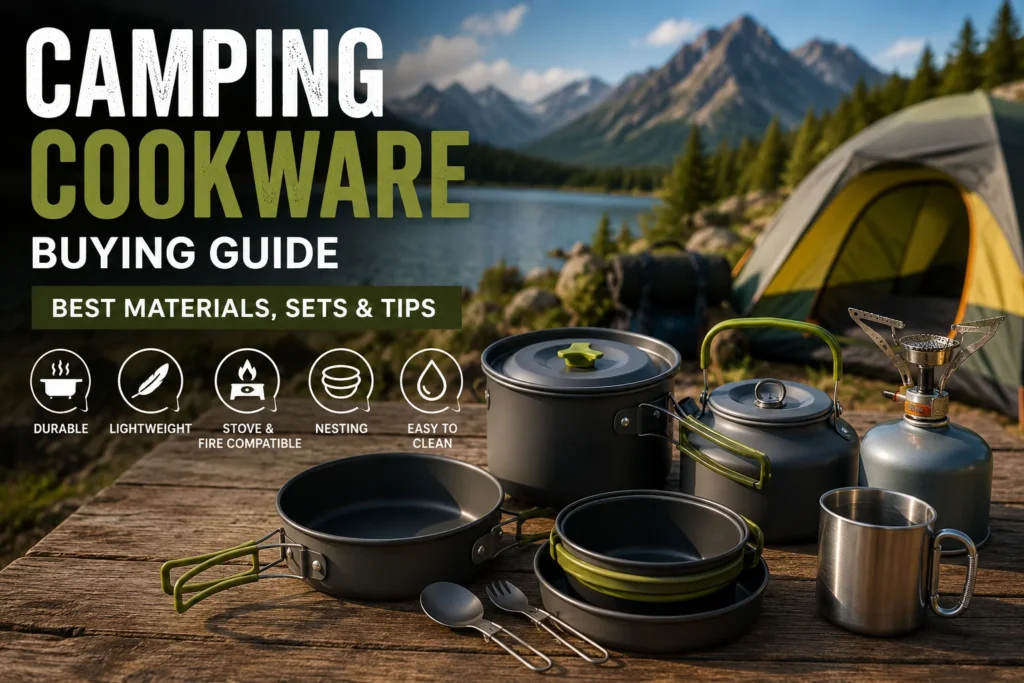
What Makes Good Camping Cookware?
Good camping cookware should be easy to cook with, easy to clean, and strong enough for outdoor use. At camp, cookware faces different problems than a home kitchen, such as small stoves, open flames, uneven heat, limited water, wind, dirt, and tight packing space.
Before buying, check the material, weight, pot size, handle design, lid fit, heat distribution, cleaning needs, and storage style. The right cookware should match how you camp, how many people you cook for, and whether you use a stove, grill, or open fire.
Best Camping Cookware by Trip Type
The best camping cookware depends on your trip style. A solo backpacker does not need the same cookset as a family camping near the car, and a campfire cook needs stronger cookware than someone boiling water on a small stove.
Think about your real cooking plan before buying. Are you boiling water, cooking full meals, heating canned food, making coffee, or cooking for a group? This simple question helps you avoid buying cookware that is too heavy, too small, or hard to clean.
Best for Backpacking
Backpacking cookware should be lightweight, compact, and easy to pack. Most backpackers need a small pot, cup, lid, and simple utensil instead of a full kitchen-style cookset.
Look for cookware that nests together and works well with a small camping stove. Titanium or lightweight aluminum can be useful because they reduce pack weight, but they should still be stable enough for safe cooking.
Best for Car Camping
Car camping cookware can focus more on comfort, size, and cooking performance because you are not carrying everything on your back. You can choose larger pots, pans, kettles, and nesting sets that make meal prep easier.
For car camping, stainless steel, nonstick, or heavier aluminum sets can work well. These options are usually better for cooking full meals, serving more people, and cleaning up around camp.
Best for Family Camping
Family camping cookware should have enough capacity for multiple people. A small solo pot will not be enough if you are cooking pasta, rice, soup, breakfast, or hot drinks for a group.
Choose a cookware set with larger pots, a useful pan, lids, safe handles, cups, bowls, and easy storage. A nesting design is helpful because it keeps the full set organized in one place.
Best for Solo Camping
Solo campers usually need simple cookware that saves space and is easy to manage. A small pot or compact cookset is often enough for boiling water, heating food, making coffee, or cooking one basic meal.
The best solo setup should be easy to carry, quick to clean, and not overloaded with extra pieces. Avoid large family cooksets unless you are car camping and want more comfort.
Best for Campfire Cooking
Campfire cooking needs cookware that can handle stronger heat and rougher use. Not every camping pot or nonstick pan is safe or smart to use over open flames.
For open fire cooking, look for cast iron, stainless steel, strong handles, and durable construction. Avoid thin cookware with plastic parts, weak coatings, or handles that are not made for high heat.
Camping Cookware Materials Compared
The material is one of the most important things to check when buying camping cookware. It affects weight, cooking speed, heat control, durability, cleaning, price, and whether the cookware works better for backpacking, car camping, or open fire cooking.
No single material is best for every camper. Titanium is great for lightweight packing, stainless steel is strong, aluminum heats quickly, cast iron is good for campfire meals, nonstick is easier to clean, and foldable silicone helps save space.
Aluminum Cookware
Aluminum cookware is popular for camping because it is lightweight, affordable, and heats up quickly. It works well for boiling water, simple meals, soups, pasta, rice, and basic camp cooking.
The main thing to check is durability and coating quality. Thin aluminum can dent more easily, while hard-anodized aluminum is usually stronger and better for regular outdoor use.
Stainless Steel Cookware
Stainless steel cookware is a strong choice for campers who want durability and long-term use. It can handle rough packing, repeated trips, and higher heat better than many lightweight cookware options.
The downside is that stainless steel can be heavier and may not spread heat as evenly as aluminum. It is a good option for car camping, group cooking, and campers who care more about strength than ultralight packing.
Titanium Cookware
Titanium cookware is best for backpackers and hikers who want to reduce pack weight. It is very light, strong for its size, and usually works well for boiling water or making simple trail meals.
Titanium is not always the best choice for full cooking because it can create hot spots and may burn food faster if the heat is too high. It is better for simple meals than slow cooking or large camp dinners.
Cast Iron Cookware
Cast iron cookware is great for campfire cooking, skillet meals, breakfast, grilled food, and slow outdoor cooking. It holds heat well and can create strong cooking performance over fire or camp grills.
The main drawback is weight. Cast iron is too heavy for backpacking, but it can be excellent for car camping, cabin trips, and family campsites where comfort matters more than pack size.
Nonstick Camping Cookware
Nonstick camping cookware is useful for campers who want easier cooking and faster cleanup. It works well for eggs, pancakes, fish, vegetables, and meals that can stick to regular metal pans.
The main thing to check is coating quality and care instructions. Nonstick cookware should be used carefully because rough utensils, high heat, or poor storage can damage the coating.
Foldable Silicone Cookware
Foldable silicone cookware is made for saving space in small camping bags, RV storage, and compact camp kitchens. It can be useful for bowls, cups, kettles, and collapsible containers.
Before buying, check whether the silicone item is made for cooking, boiling, or only serving and storage. Some foldable silicone gear is very helpful, but not every piece is meant for direct flame or high heat.
Compare Camping Cookware Materials Before Buying
Before buying camping cookware, compare each material with your trip style, cooking plan, and packing space. A lightweight pot may be best for backpacking, while stronger cookware may be better for car camping, family meals, or open fire cooking.
| Cookware Material | Best For | What to Check Before Buying |
|---|---|---|
| Aluminum Cookware | Backpacking, quick meals, boiling water, and lightweight camping | Check thickness, coating quality, dent resistance, heat control, and cleaning needs. |
| Stainless Steel Cookware | Car camping, family meals, group cooking, and long-term use | Check weight, handle strength, lid fit, heat distribution, and stove or fire compatibility. |
| Titanium Cookware | Ultralight backpacking, hiking, and simple trail meals | Check pot size, pack weight, price, hot spots, and whether it suits your cooking style. |
| Cast Iron Cookware | Campfire cooking, skillet meals, breakfast, and car camping | Check weight, handle safety, seasoning needs, cleaning care, and open fire use. |
| Nonstick Camping Cookware | Easy cleanup, eggs, pancakes, fish, and beginner camp cooking | Check coating quality, utensil safety, heat limits, storage protection, and care instructions. |
| Foldable Silicone Cookware | RV storage, compact packing, bowls, cups, kettles, and space-saving camp kitchens | Check heat rating, direct-flame safety, fold quality, stability, and whether it is for cooking or only serving. |
Camping Cookware Set vs Single Pot
A camping cookware set is better if you cook full meals, camp with family, or want matching pots, pans, lids, cups, bowls, and storage pieces in one kit. It can save planning time because most basic cooking items are already included.
A single pot is better for solo campers, backpackers, and people who mostly boil water or heat simple meals. It is lighter, easier to pack, and easier to clean, but it may feel limited if you want to cook for more than one person.
Nesting Cookware Sets and Packable Designs
Nesting cookware sets are useful because the pots, pans, lids, cups, and utensils fit inside each other. This saves space and keeps your camp kitchen organized inside a backpack, tote, RV storage bin, or camping box.
Before buying a nesting set, check how easily the pieces fit together and whether the handles, lids, and utensils stay secure. A good packable design should save space without making the cookware hard to remove, clean, or use at camp.
How to Choose the Right Camping Cookware
Choosing the right camping cookware depends on your group size, cooking style, heat source, packing space, and cleaning needs. Use this table to compare the main buying points before choosing a cookset.
| What to Check | Why It Matters | Best Buying Tip |
|---|---|---|
| Group Size and Pot Capacity | A small pot may work for one camper, but it can feel useless for family meals or group cooking. | Solo campers can use a compact pot, while families should choose larger pots, pans, and serving pieces. |
| Weight and Pack Size | Backpackers need cookware that is easy to carry with food, water, stove, fuel, and other camping gear. | For backpacking, check the total weight of the pot, lid, cup, stove, fuel, utensil, and storage bag together. |
| Heat Distribution | Some lightweight cookware heats fast but creates hot spots that can burn food. | Choose better heat control if you cook real meals, but focus on quick boiling if you mostly make simple trail food. |
| Stove and Campfire Compatibility | Not all camping cookware works safely on a stove, grill, or open fire. | Check the heat source before buying and avoid plastic handles, weak coatings, or thin cookware near open flames. |
| Handle Safety and Lid Design | Camp cookware gets hot fast, so weak handles or poor lids can make cooking harder and less safe. | Look for stable folding handles, a secure lid, and a design that helps water boil faster and food stay covered. |
| Cleaning and Storage | Outdoor cooking has limited water, soap, and counter space, so hard-to-clean cookware can become a problem. | Choose smooth surfaces, removable parts, nesting design, and a storage bag for easier packing and cleanup. |
What Should Be Included in a Camping Cookware Set?
A good camping cookware set should include the basic items you need to cook, serve, clean, and pack food outdoors. The exact pieces depend on your trip, but most campers need pots, pans, lids, bowls, cups, utensils, and a storage bag.
Do not choose a set only because it has many pieces. A smaller set with useful, durable items is better than a large kit full of weak tools you will not use. You can also use a camping gear checklist to make sure your cooking kit matches the rest of your camp setup.
Pots and Pans
Pots and pans are the main parts of any camping cookware set. A pot is useful for boiling water, cooking pasta, rice, soup, or oatmeal, while a pan is better for eggs, pancakes, meat, vegetables, and skillet meals.
For solo camping, one small pot may be enough. For family camping, a larger pot and pan combo is usually more useful.
Kettle or Boiling Pot
A kettle or boiling pot is helpful for making coffee, tea, instant meals, oatmeal, and hot drinks at camp. It can also make boiling water faster and easier than using a wide pan.
Backpackers may prefer a simple lightweight pot instead of a separate kettle. Car campers can choose a larger kettle if they have more packing space.
Bowls Cups and Utensils
Bowls, cups, and utensils make eating easier, especially for family or group camping. Some cookware sets include these pieces, while others only include pots and pans.
Check whether the included bowls and cups are strong, easy to clean, and useful for real meals. Avoid sets with too many tiny accessories if they only add clutter.
Lids Handles and Storage Bag
Lids, handles, and a storage bag can make a cookware set much easier to use. Lids help food cook faster, handles make lifting safer, and a storage bag keeps everything together.
Before buying, check whether the handles lock well, fold smoothly, and feel safe when the cookware is full. A good storage bag should be simple, durable, and easy to pack.
Cleaning Tools
Cleaning tools are easy to forget, but they are important for camp cooking. A small sponge, scraper, towel, or cleaning cloth can help you clean cookware without carrying too much extra gear.
Choose cleaning tools that match your cookware material. Nonstick cookware needs gentle cleaning, while cast iron and stainless steel may need different care.
Best Budget Camping Cookware
The best budget camping cookware should be affordable without feeling weak, unsafe, or hard to clean. A cheap cookset is only useful if the pot, pan, handles, coating, and storage design can handle real outdoor use.
For beginners, a basic aluminum or stainless steel set can be a smart starting point. Check the material quality, pot size, handle strength, lid fit, and cleaning needs before buying, because low price alone does not make cookware a good deal.
Best Cookware for Family Camping
The best cookware for family camping should have enough space to cook meals for more than one person. Families usually need larger pots, a useful pan, lids, cups, bowls, utensils, and a storage bag to keep everything organized.
For family trips, comfort matters more than ultralight packing. A nesting cookware set with larger capacity, strong handles, easy cleaning, and durable material can make breakfast, dinner, hot drinks, and group meals much easier at camp.
Best Cookware for Open Fire Cooking
The best cookware for open fire cooking should be strong enough to handle higher heat, smoke, and rough camp use. Cast iron and stainless steel are often better choices for fire cooking because they can handle stronger heat better than thin lightweight cookware.
Before buying, check whether the cookware is safe for open flames. Avoid weak coatings, plastic parts, thin handles, or cookware that is only made for small camping stoves, because open fire cooking needs more durable construction.
Common Mistakes When Buying Camping Cookware
Many campers buy camping cookware by looking only at price, number of pieces, or product photos. But a cookset should match your trip style, group size, heat source, cleaning routine, and packing space.
Avoid these common mistakes before buying camp cookware:
- Buying too many pieces that you will not use at camp.
- Choosing a pot that is too small for your group size.
- Ignoring material quality and only looking at price.
- Using nonstick cookware on high heat without checking care instructions.
- Buying heavy cookware for backpacking when pack weight matters.
- Choosing thin cookware for open fire cooking when stronger material is needed.
- Forgetting lids and safe handles that make cooking easier.
- Ignoring cleaning needs when water and space are limited.
- Not checking nesting design before packing.
- Buying cookware that does not match your stove or fire setup.
Final Verdict
The best camping cookware is the cookware that fits your trip style, cooking plan, group size, and packing space. Backpackers may need lightweight titanium or aluminum, while car campers and families may prefer larger stainless steel, nonstick, or nesting cookware sets.
For most beginners, a simple and durable cookset with useful pot capacity, safe handles, easy cleaning, good storage, and the right material is the best choice. Do not buy the biggest set only because it has more pieces; buy the set that you will actually use outdoors.
Frequently Asked Questions
What is the best camping cookware material?
The best camping cookware material depends on your trip, but aluminum is good for lightweight cooking, stainless steel is strong, titanium is best for backpacking, and cast iron works well for open fire cooking.
Is stainless steel or aluminum better for camping cookware?
Aluminum cookware is lighter and heats faster, while stainless steel cookware is stronger and better for long-term car camping or group cooking.
Is titanium cookware good for camping?
Yes, titanium cookware is good for camping if you want ultralight gear for backpacking, but it is better for boiling water and simple meals than full cooking.
Can camping cookware be used on an open fire?
Some camping cookware can be used on an open fire, but you should choose strong materials like cast iron or stainless steel and avoid plastic handles, weak coatings, or thin cookware.